Dr. Fildes' Friction and Wear Investigations
Quick Reads - Actionable Information for Litigators, Insurers, Corporate Counsel, and Corporate Leaders..
CASE STUDIES
John Fildes, Ph.D.

Key takeaways....
Numerous areas of litigation are completely or mostly related to tribology, but most litigators probably do not know the term, or that there are experts who specialize in tribology.
Tribology is the science of friction and wear. Any two surfaces in motion relative to each other form a tribological system whether the surfaces are in direct contact or separated by a lubricant.
Automotive companies, aerospace companies, industrial machinery companies, and refineries utilize tribology in many (likely most) of their products.
Dr. Fildes has been involved in tribology R&D since the start of his career at Borg Warner’s Corporate Research Center through his most recent R&D, funded by the Army, and conducted at the Institute of Tribology and Coatings which Dr. Fildes co-founded and led.
Physical chemistry is central to tribology. Tribological investigations are multidimensional and benefit from Dr. Fildes’ analytics based on physical chemistry approach.
Dr. Fildes has utilized (and developed) tribological bench-scale studies that realistically simulate situations commonly encountered in litigation and insurance disputes. These tests provide a powerful way to do carefully controlled studies of how and why friction and wear occur.
Corrosion is also part of tribology and Dr. Fildes’ electrochemistry approach to corrosion studies is uniquely powerful to investigate corrosion issues.
Introduction to Tribology
Dr. Fildes conducts accident and failure analysis investigations for insurers and litigators. His cases typically involve the performance of materials, materials compatibility, and tribology, the science of friction, wear, and lubrication that is discussed in this paper.
Numerous areas of litigation are completely or mostly related to tribology, but most litigators probably do not know the term, or that there are experts who specialize in tribology. The easy way to understand the scope of application of tribology is to think of it as encompassing any situation where two surfaces are in relative motion and contacting each other either directly or through a lubricant. This includes brakes, clutches, hard disks, bearings, door latches, artificial joints, transmissions, locks, walking on all types of surfaces, cavitation, erosion due to fluid impingement, and some types of corrosion. The scope of technologies encompassed by tribology include materials (metals, plastics, composites, and ceramics), hard coatings, oils, greases, solid lubricants, and fuels. The disciplines that compose the science of tribology include mechanical engineering, metallurgy and materials science, physics, and chemistry, especially physical chemistry which provides the science underlying the other disciplines just mentioned.
Tribology is central to the products that many companies produce. Automotive companies, aerospace companies, industrial machinery companies, and refineries utilize tribology in many (likely most) of their products. Nonetheless, litigators seek and hire mechanical engineers and metallurgists who may have little formal training or experience with the science of tribology, and who may miss key issues or produce ambiguous results by narrowly focusing investigations.
Dr. Fildes has experience with a broad range of materials issues, and a unique core competency in tribology. He setup and led the Institute of Tribology and Coatings that was funded by the U.S. Army, and he has been involved in tribology R&D since he began his career at Borg-Warner’s Roy C. Ingersol Research Center. Tribology was central to a vast array of Borg-Warner’s businesses and the Corporation’s R&D tribology activities were part of the physical chemistry group of which Dr. Fildes was a senior staff member.
For litigators, Dr. Fildes uses (when appropriate) realistic bench-scale tests that accurately replicate the type of contact (point, line, conformal, etc.), the type of motion (sliding, rolling, unidirectional or oscillatory), the contact pressure, lubrication (if any), and the environmental conditions. Using industry standard test instruments and modified ASTM standards, this approach offers important advantages over solely doing full scale testing. The test instruments are computer controlled and highly instrumented, providing a degree of control and a quality of measurement that is hard to achieve in full scale tests. The flexibility of the bench-scale tests allows a wider range of conditions to be measured, and enough replicates to obtain meaningful statistics, estimates, and projections. A limited number of full-scale tests may also be conducted to validate the accuracy of the bench-scale tests, but this is not always necessary because of the highly developed theory and experience base of bench-scale testing.
The bench-scale tests Dr. Fildes uses are the same ones (or close variants) being used by manufacturers for regulatory and quality control testing of the products. Dr. Fildes uses data from bench scale testing in his analytics based on physical chemistry investigative approach to provide a level of insight, responsiveness, and low cost not offered elsewhere. When needed to make his results clear to attorneys, judges, and juries, Dr. Fildes converts technical test results, and combines multiple performance metrics, into simple rankings.
Case Study - Small Arms Tribology
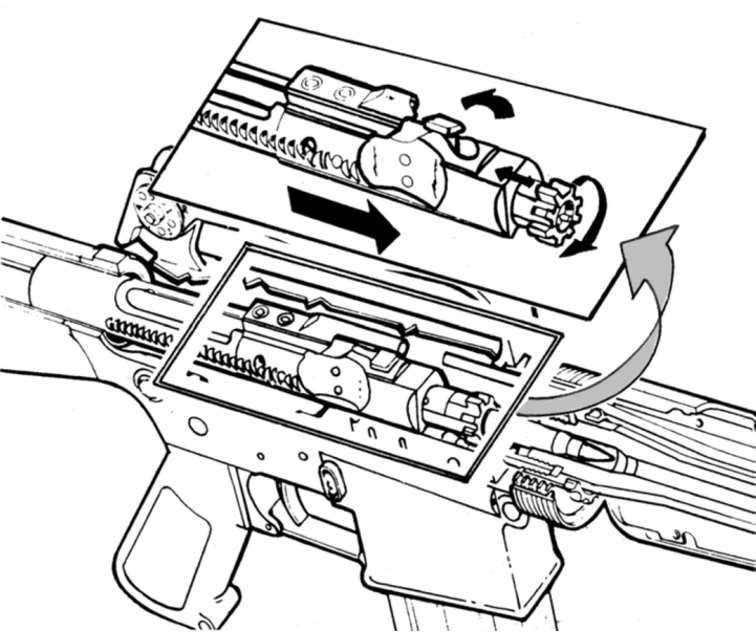
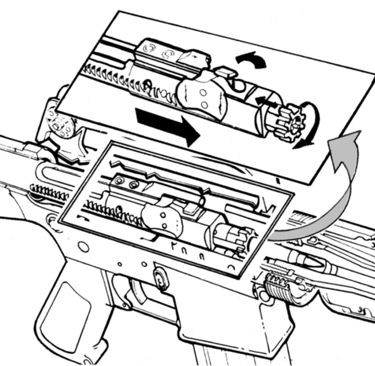
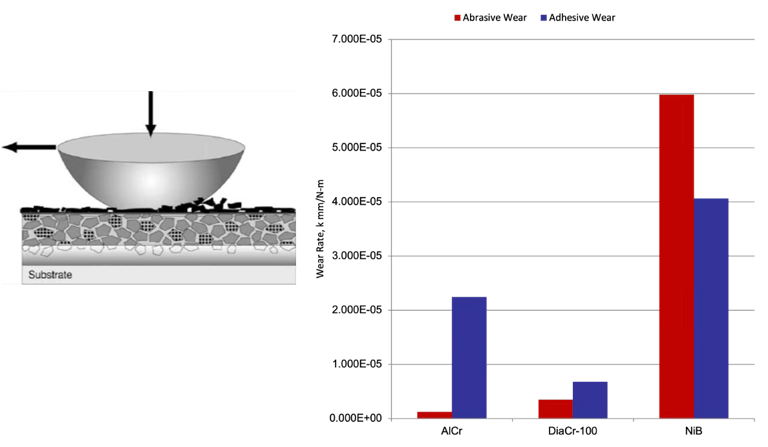
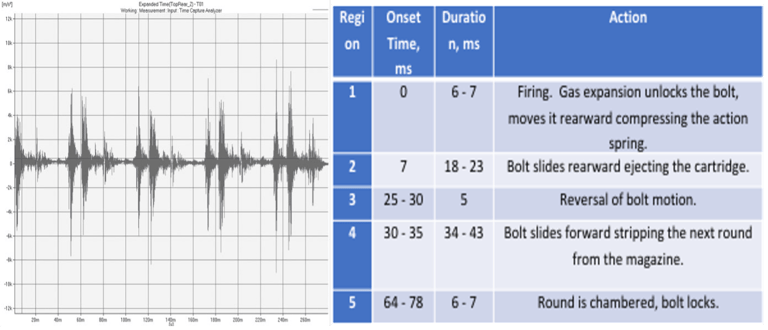
Although this case study is for small arms tribology, it shows how tribology and Dr. Fildes’ analytics based on physical chemistry approach identifies the cause of failures, an outcome that is equally applicable to litigation situations. Small arms used by the military can wear quickly due to exposure to the very fine particulate sand in the middle-east. A weapon has many actions such as extracting the next round from the magazine, advancing that round to the chamber and locking the bolt prior to firing, triggering the round, unlocking the bolt and withdrawing the fired casing, and ejecting it. Some of these actions are driven by gas from the firing of a round and some are driven by a spring that is compressed by the gas from firing a round, It was not know what actions were wearing and causing jamming of the weapon.
Dr. Fildes’ work was instrumental in determining the cause of the abrasive wear and jamming of the weapon, and this helped to lead to a substantial improvement in the use, by the military and the commercial small arms industry, of emerging wear resistant coatings in small arms.
Full scale testing of small arms is very time-consuming and would not have allowed enough testing to establish the cause of the failure, or to screen emerging wear resistant coatings. That is why Dr. Fildes devised a unique small arms testing methodology that uses bench-scale testing to identify the key technical issues followed by a limited amount of full-scale weapons testing and electrochemical corrosion assessment.
The methodology devised by Dr. Fildes is based on pioneering R&D Dr. Fildes conducted under Army funding at the non-profit Institute of Tribology and Coatings that Dr. Fildes co-founded and led. Dr. Fildes developed a new and highly effective 3-ball on disc test method and test equipment to measure the friction and abrasive and adhesive wear resistance of coatings, the description and results of which were published in the leading tribology journal Wear, and also presented at the conference Wear of Materials, which is the premiere tribology conference held every 5 years. A few full scale test verified that the bench scale test results were representative of the actual wear of the weapon.
Modified ASTM Bench Scale Testing
Dr. Fildes’ approach uses modified ASTM methods with standard bench-scale test equipment that simulate a specific aspect of a weapon. A weapon has many moving components and many types of motion such as sliding, rolling, engagement/disengagement, reciprocation, oscillation, etc. A unique systematic framework for categorizing the motion and interaction of surfaces and for selecting bench scale test is provided by the tribological aspect number, which is a four-digit code in which each of the four digits represent a key parameter. The first (most significant) digit indicates the type of motion, the next digit indicates the contact geometry, the next indicates the contact pressure, and the final (least significant) digit indicates entry angle. The following table identifies an appropriate test framework for virtually any aspect of small arms.
This approach uses the extensive knowledge base that exists for the various ASTM methods, utilizes equipment that is proven, and allows others to replicate the testing and results. This approach allows the key issues in a litigation or intellectual property dispute to be quickly determined for early resolution and limits and focuses any full-scale testing may be needed.
Acceleration and Acoustic Monitoring of the Weapon’s Actions
Wear of the weapons actions causes an increase in friction and acoustic emissions during firing of the weapon. The increase in friction changes the force and timing of the weapon’s actions. Dr. Fildes pioneered use of acceleration and acoustic monitoring during full scale testing to quantify the impact of wear on the timing of the weapon’s actions and on the acoustic emissions.
During full scale testing, the weapon is monitored with a sensor suite that includes a PCB 3 axis accelerometer (model 350B50) that provides a range of +/- 10,000 g's with a frequency response of 10,000 Hz for +/- 1 db and 20,000 Hz for -3 db and a micro-electromechanical (MEMs) acoustic sensor. Data collection is via a data acquisition system with 4 channels, each sampling at up to 51,200 samples per second with 24 bits. The accelerometer provides 0.524 mv/g and the 24 bit data converter is able to read down to 176 nv, providing a detection range of slightly less than +/- 0.5 g's to +/- 10,000 g's. The MEMs acoustic sensor provides 40 Hz to 20 KHz frequency response. Advanced wavelet joint time-frequency analysis and neural network signature recognition are used with statistical methods and short time Foruier transform analysis.
Using this approach, Dr. Fildes clearly identified the time at which each of the weapons’ actions occurred and how that timing changed due to the friction of different coatings applied to the weapon and to wear during use of the weapon.


Bio for John Fildes, Ph.D.
Dr. Fildes is a doctoral scientist who has conceived, organized, and conducted $28 million of projects including R&D, litigation expert investigations, and collaborations involving Government labs, large defense companies, and leading universities.
Dr. Fildes was also CEO of an $18 million professional scientific/engineering consulting firm; president of a not-for-profit R&D institute; founder and leader of a $6 million scientific/engineering consulting firm; leader of a $3.5 million startup product design firm; leader of a $10 million contract research lab at Northwestern University; a senior professional in the $4.5 billion Borg-Warner Corporation Research Center.
Product Failures Expertise
Friction; Abrasive Wear, Adhesive Wear, Testing, Friction Measurement, Wear Prevention, Lubricants, Oil Quality Monitoring, Solid Lubricants, Hard Protective Coatings, Decorative Coatings, Paint, Electroplated Coatings, Corrosion, Electrochemical Corrosion Measurement, Ice Prevention; Gas Sensors, Carbon Monoxide Detectors; Product Design Procedures.
Materials & Process Expertise
Composites for Aviation, Buildings and Civil Construction: Thermoset and Thermoplastic Resins and Adhesives, Resin Transfer Molding, Autoclaving, Impedance Spectroscopy; Use of Composite Materials and Spray Foams Made On-Site In Construction; Roadway Chip Sealing, Water Treatment; Intelligent Process Control.
Chemistry & Chem Processes Expertise
Prediction Of Materials Properties, Stability, And Compatibility; Chemical Exposure; Chemical Process Equipment Failures.
Contact us
Whether you have a request, a query, or want to work with us, use the form below to get in touch with our team.